
A strong school year starts with more than sharpened pencils and decorated bulletin boards. These low-lift, classroom-ready ideas help students feel known, contribute to their community, and practice the positive habits that make learning possible.
The first days of school are full of possibility. Students are learning names, navigating routines, and deciding whether the classroom feels like a place where they can belong. Teachers are setting the tone, too—not only for academics, but for how the class will learn, solve problems, and care for one another all year long.
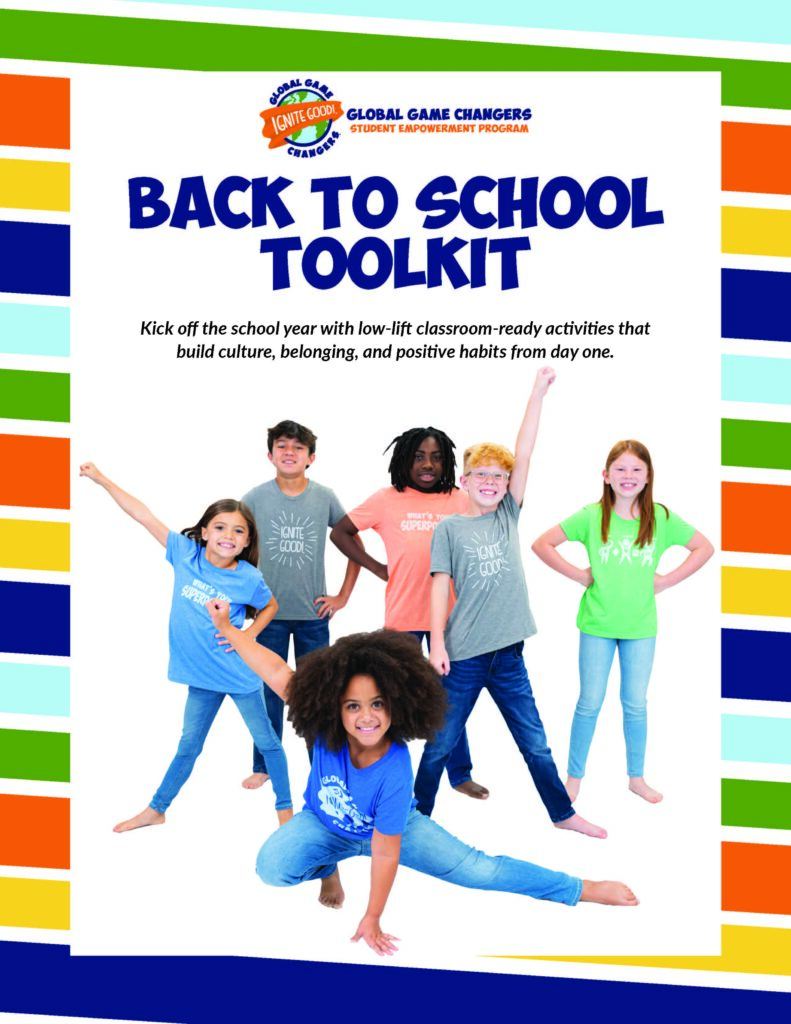
That is why the best back-to-school plans do more than fill time. They give students meaningful ways to connect, contribute, and practice. The Global Game Changers Back to School Toolkit organizes this work into three simple priorities: get to know one another, create classroom expectations together, and establish routines that strengthen climate and culture.
You do not need a complicated launch plan to make a lasting first impression. A few intentional activities, repeated consistently, can help turn a room full of individuals into a classroom community.
Students are more willing to participate, take healthy risks, and support one another when they feel known. Begin with activities that ask students to collaborate while revealing something meaningful about themselves.
Try a Birthday Lineup, challenging students to arrange themselves by birthday month and day. Add a silent round to encourage creative communication and teamwork. Or invite students to write one interesting fact on a sheet of paper, fold it into a paper airplane—or a “Flying Superhero”—and send it across the room. After everyone retrieves a plane, students read the fact and guess its owner.
A GGC-themed round of Would You Rather can open the door to deeper conversations about talents, hearts, superheroes, and superpowers. Keep the response method active and inclusive: students might drum on their knees to choose one answer and wave their hands for the other.
The goal is not simply to memorize names. It is to build curiosity. Encourage students to notice what they have in common, appreciate what makes each person unique, and listen closely to one another.
Classroom expectations are more powerful when students help shape them. Their participation communicates an important message: this is our learning community, and each of us has a role in making it work.
Start with a short public forum. Give students quiet time to write their ideas, then invite volunteers to explain what they believe the class needs in order to learn and thrive. Record the ideas where everyone can see them. The class can vote on its priorities, or you can guide students in combining similar suggestions.
Keep the final list short; three to five expectations is usually enough. Phrase each one positively and focus on growth. “Listen when others are speaking” gives students a more positive action than “Don’t interrupt.” “Take care of our learning space” creates shared responsibility instead of simply listing what not to do.
Then make the expectations visible through practice. Invite pairs to role-play common classroom moments: independent work, a guest speaker, lunch, transitions, or traveling through the school. Ask classmates to name the effective actions they observe. This helps transform abstract rules into behaviors students can recognize and repeat.
The routines that support a positive classroom climate work best when they are introduced early and practiced often. Choose one or two tools at first, then build gradually.
Belonging grows when students learn to recognize strengths in themselves and others. Create a class poster titled “We See Everyone as Super.” List every student’s name and invite the class to identify something positive and specific about each person. Revisit the poster as students discover new talents and qualities throughout the year.
This practice connects naturally to the Global Game Changers belief that every child has a unique capacity to make a difference: MY TALENT + MY HEART = MY SUPERPOWER!® When students explore what they do well, what they care about, and how they can use both to help, classroom culture becomes more than a set of rules. It becomes a shared commitment to action.
You do not have to introduce every activity at once. Try this manageable rhythm:
From there, keep the routines alive. Refer to the class expectations, practice calming strategies when students are already regulated, recognize helping behaviors, and create frequent opportunities for students to share their talents.
A classroom does not become a community in a single day. It grows through small, repeated moments: learning a classmate’s name, contributing an idea, practicing a routine, offering help, or recognizing something super in someone else.
When those moments begin on day one, students receive a powerful message: you belong here, your voice matters, and you can make a difference.