
How the right guest can enrich instruction, expand your support network, and strengthen community trust
Overview: A well-chosen classroom guest does more than engage students. The right visitor gives teachers access to real-world expertise, creates fresh connections to existing curriculum, strengthens relationships with families and local organizations, and helps the community see the school as an active, welcoming place where students are preparing to contribute.
Teachers are asked to make learning relevant, expose students to careers, build family partnerships, respond to community needs, and bring authenticity to subjects they may not have experienced firsthand.
But you don’t have to be the only expert in the room.
Community guests can help reinforce and carry that work. They add knowledge, stories, materials, and perspectives that would be difficult for one educator to reproduce alone. When guests walk into the classroom, learning changes. Students can ask questions. They can hear the choices behind a career or cause. They can connect a familiar face with an issue that once felt distant.
- Teachers gain a high-interest learning experience without requiring them to build every example from scratch. They might also find a new mentor, an authentic audience for student work, a future project partner, and stories or examples the class can revisit for weeks.
- Students gain a clearer picture of how their unique community works—and where they fit within it
- The community member gains a richer picture of what happens inside the building after witnessing thoughtful teaching and curious, capable students firsthand. Those experiences can build trust, pride, advocacy, and a sense that the school is a community asset.
For teachers who use Global Game Changers, guests can reinforce Heart Badges, Talents, and service projects. For teachers who do not, the same approach can strengthen science, literacy, social studies, arts, career exploration, social-emotional learning, and project-based instruction. The essential question is universal: Who could make this learning more real?
Three ways a community guest can deepen learning
The most effective visits have a clear connection to what students are already learning. Rather than asking a guest to deliver a general presentation, invite that person to fill one of three meaningful roles.
1. A storyteller connected to a cause
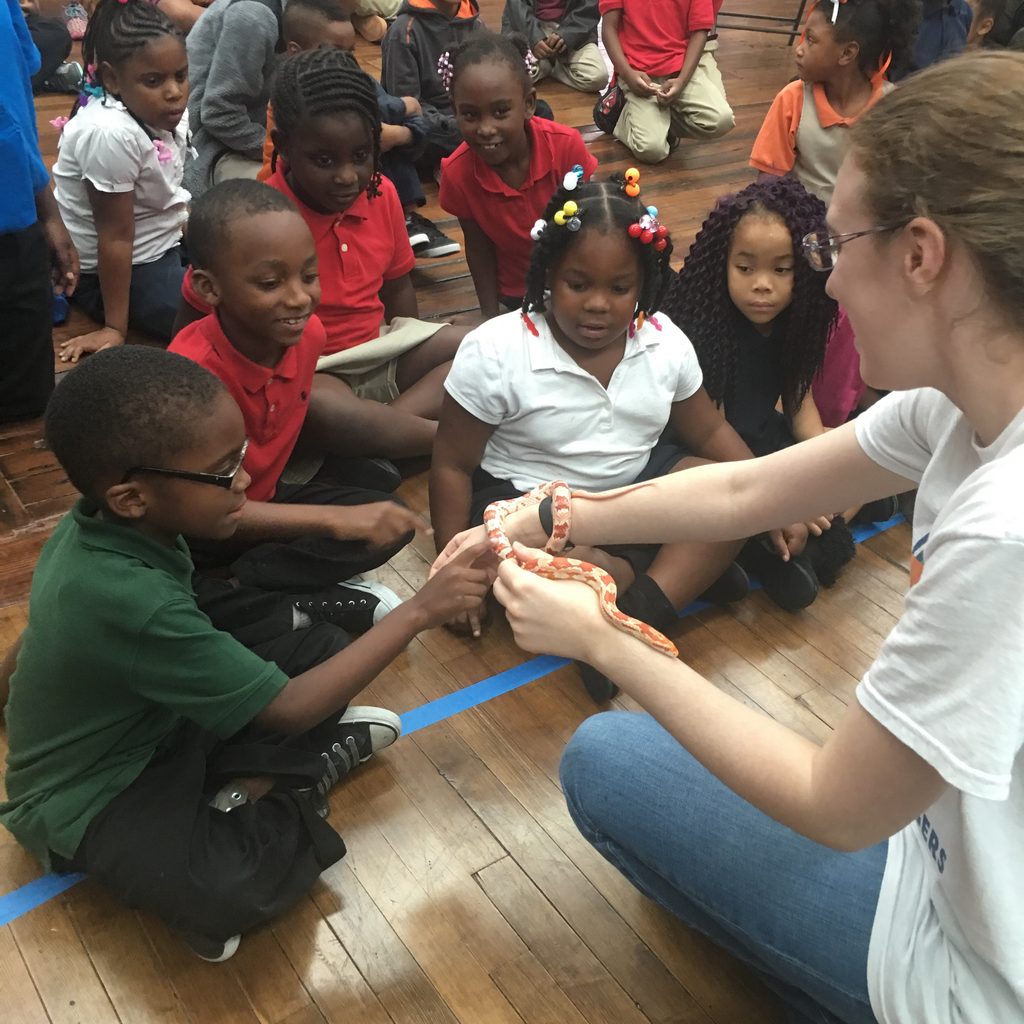
A guest speaker can bring a topic or cause to life by sharing what it means to them and how they serve it. An animal shelter volunteer can discuss responsible care. A librarian can talk about access to education. A park employee can explain how daily decisions protect the environment. A firefighter, police officer, or EMT can enrich a community-helper or safety unit. In GGC classrooms, these same visitors can give students a real-world connection to a Heart Badge.
These stories help students move beyond a broad label such as “animals” or “basic needs” and understand the people, challenges, and acts of care behind it.
2. An expert who helps students strengthen a talent
Community members can also help students build skills they may use in a class project. A graphic designer might offer feedback on a poster. A writer could help students shape persuasive letters. A musician might demonstrate how a performance can support a cause. A gardener could help a class plan a pollinator space.
This kind of visit reinforces that talents are not simply things students are good at. They are pathways students can develop to create their own futures.
3. A partner connected to a service project
When appropriate, invite a representative from the organization that may receive or benefit from a class project. That connection makes the purpose of the work more concrete. Students can learn what is genuinely useful, ask respectful questions, and design with the recipient rather than making assumptions about what others need.
For younger children especially, meeting a real person can make it easier to imagine whom they want to help when it is time to plan a class or service project. GGC educators can carry that connection into students’ Superpower Projects.
Where to find the right person
Start close to home. Schools often have a larger community network than educators realize.
- Begin with parents and guardians. Invite families to share their occupations, talents, cultures, volunteer experiences, hobbies, and community connections. Even when they are not the right speaker themselves, they may know someone who is.
- Ask within the wider school community. Teachers, support staff, board members, alumni, and school partners may include veterans, health professionals, artists, business owners, public servants, volunteers, and people with connections to local organizations.
- Build on existing service relationships. If the school already supports a food pantry, shelter, veterans’ organization, environmental project, or other nonprofit, ask whether a representative could meet with students.
- Look to public and cultural organizations. Libraries, museums, parks departments, theaters, colleges, extension offices, fire departments, and local government agencies often have staff who provide educational outreach.
- Search by cause and location. Local nonprofit directories and reputable charity search tools can help educators identify organizations working on a particular issue nearby.
- Let students notice community expertise. Once students begin looking, they may recognize helpers they already encounter—and may even be ready to share their own experiences as class experts.
A ready-made connection: Miss America local titleholders
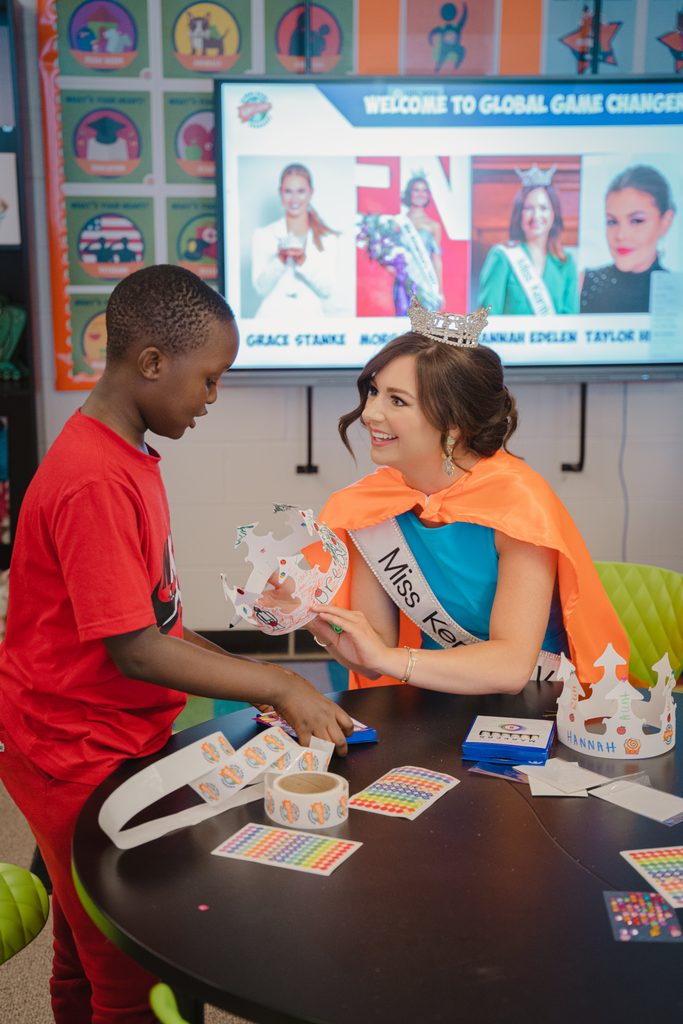
Whether or not a class already uses GGC, the organization’s partnership with the Miss America program offers educators another promising route to a classroom guest. Local and state titleholders are strong examples of people connecting their Hearts and Talents through service, leadership, and personal advocacy.
Through the partnership, titleholders can access GGC activities organized around the 12 Heart Badges, including Animals, Arts, Basic Needs, Bullying, Education, Elderly, Environment, Health, Human Rights, Rescue, Veterans, and General. That gives a titleholder’s visit a natural connection to the topics students are exploring rather than making it a stand-alone appearance.
A titleholder might share the cause at the center of her service initiative, demonstrate a talent she has developed, discuss the work and persistence behind her goals, or lead a Heart Badge activity. Students meet someone who can speak authentically about using visibility, skill, and commitment to improve a community.
Educators interested in scheduling a visit can begin with their state or local Miss America organization. GGC’s partnership page at globalgamechangers.org/mao offers additional information.
Set the visit up for success
A thoughtful invitation and a little preparation can turn a pleasant presentation into meaningful learning.
- Make the connection explicit. Tell the guest what students are studying, the curriculum topic or skill being explored, and what you hope students will understand afterward. GGC educators can also name the relevant Heart Badge or Talent.
- Share the practical details. Include the date, time, location or video link, student age and group size, desired length, available technology, accessibility needs, and a clear point of contact.
- Invite interaction. Ask the guest to bring a safe object, photograph, demonstration, short activity, or question that will help students participate.
- Prepare students. Introduce the guest’s role, build background knowledge, and have students develop questions in advance. Review respectful listening and privacy boundaries.
- Follow school procedures. Use established visitor approval, supervision, safeguarding, photo, and communication policies for both in-person and virtual guests.
- Plan the bridge back to learning. Afterward, let students reflect on the guest’s Heart, Talents, choices, and impact—and identify one idea they want to carry into their own work.
Questions that move beyond “What do you do?”
Help students ask questions that reveal the human story behind the role:
- Heart: What cause or group of people do you care about, and why?
- Talent: What skills do you use in your work or service? How did you develop them?
- Challenge: What is difficult about this work, and what helps you keep going?
- Impact: How do you know your efforts are helping?
- Invitation: What is one age-appropriate way students could help or learn more?
Turn one visit into an ongoing relationship
The strongest community connections do not always end when the guest leaves. A class might send follow-up questions, share the results of a project, invite feedback during the planning process, or reconnect later in the year. A guest may become a project adviser, an authentic audience, or a friendly face students recognize in the community.
These relationships benefit more than a single lesson. They give teachers people to call when a future unit needs expertise, feedback, or an authentic audience. They help students develop belonging by showing that learning, service, and community life are connected. And they invite families and local organizations to see the school as a place where thoughtful educators and capable young people are contributing—not someday, but now.
One invitation can widen the circle around your classroom
A well-chosen community guest makes possibility visible for students and support visible for teachers. Students see that people contribute through science, art, leadership, listening, advocacy, building, teaching, organizing, protecting, and countless other strengths. Teachers gain an ally who can enrich content and affirm why the learning matters.
Begin with the lesson already in front of you. Ask whose experience could make it more real, whose expertise could help students grow, or whose perspective could lead to more thoughtful work. Then open the classroom door—literally or virtually—and let the community see the learning, care, and potential already thriving inside your school.