
A proactive framework for de-escalation, conflict resolution, and a more caring school culture
Overview: Students cannot always prevent frustration, conflict, or overwhelming feelings – but they can learn what to do next. GGC’s “Don’t Be Krumi, Be a Hero” campaign gives teachers, counselors, and school leaders practical ways to help students recognize emotions, calm their bodies, communicate needs, and choose responses rooted in care.
The moment before a behavior matters
A student is bumped at recess. A math problem feels impossible. Someone grabs the ball, laughs at a mistake, or sits too close. In the seconds that follow, the student may lash out, shut down…or make a choice that helps the situation move forward.
Adults often address behavior after it happens. Consequences and repair have their place, but students also need instruction before the difficult moment: how to notice what is happening in their bodies, pause before reacting, communicate clearly, and choose a response they can feel proud of later.
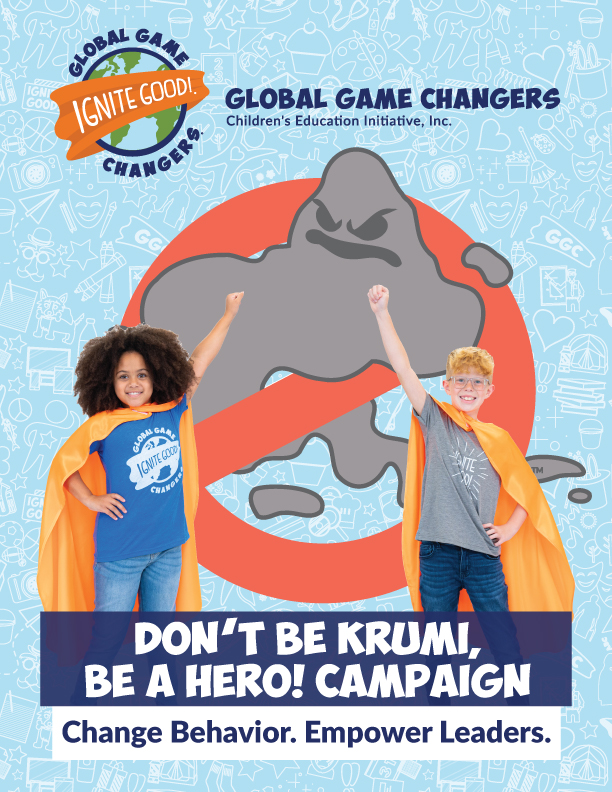
That is the purpose of Global Game Changers’ “Don’t Be Krumi, Be a Hero” campaign. Designed as an anti-bullying and de-escalation resource, it teaches a simple idea: students always have a choice in how they respond, even when the feeling or problem is not their choice.
Give students language they can remember
In the Global Game Changers world, Krumi is a cloud of apathy. He encourages people not to care, not to help, and to believe that making a positive choice takes too much effort. Heroes push back by using their hearts, talents, and helping hands to care for others and make the world better.
“What would Krumi choose? What would a Hero choose?” gives students a memorable way to examine behavior without defining a child by one mistake. The focus stays on the choice, not the student’s identity. A Krumi choice may be yelling, shoving, giving up, excluding, or reacting before thinking. A Hero choice may be breathing, asking for help, naming a feeling, using respectful words, including someone, or trying another strategy.
The contrast works especially well when adults model both options, invite students to role-play common school scenarios, and reinforce that everyone makes Krumi choices sometimes. Being a hero means practicing how to notice, reset, repair, and choose care more often.
Seven ideas you can use in any school
1. Start with a quick emotional check-in
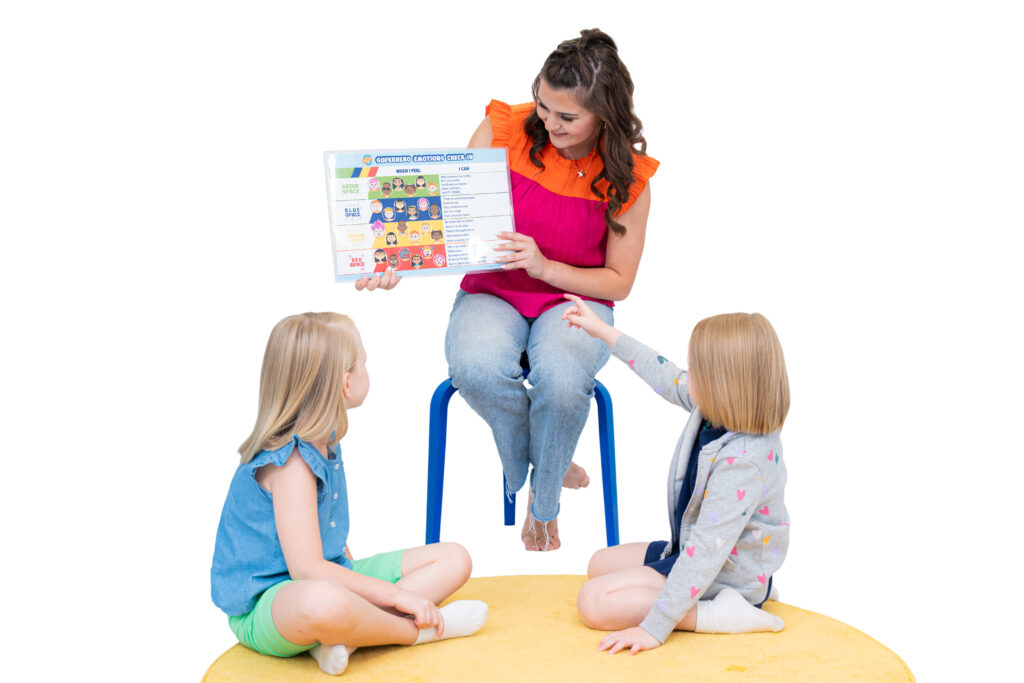
Before students can regulate a feeling, they have to recognize it. Build a brief check-in into morning meeting, advisory, or counseling groups. Students might name a feeling, draw it, point to a color, or quietly place a magnet on a chart. Keep participation emotionally safe; the goal is awareness, not forced disclosure.
Pair the check-in with one action students can choose: take deep breaths, stretch, get water, draw or write, ask for a hug, find a trusted adult, or use another strategy that works for them. You can find some ideas for choices on GGC’s Emotions Chart.
2. Teach students to recognize body signals
Big feelings often show up physically before students have words for them. Help children notice warning signs such as tight fists, a hot face, faster breathing, a racing heart, shaky hands, tense shoulders, or a stomach in knots. Explain that a response might look a little different person to person. Then practice matching those signals with a calming response.
This shifts the conversation from “Why did you do that?” to “What did your body tell you, and what can you try next time?”
3. Create a Stop and Think space
A calm-down space should support regulation, not function as punishment. Choose a quiet, predictable place where students can pause, identify how they feel, use one or two calming tools, think through the problem, and prepare to rejoin learning.
Avoid filling the area with too many choices. A feelings chart, breathing visual, paper and pencil, timer, or small sensory tool may be enough. Model how to use the space when students are calm so it feels familiar when they are overwhelmed.
4. Agree on a Hero Signal
When emotions rise, asking for help can be difficult or embarrassing. Create a discreet class signal students can use to communicate, “I need a moment.” It might be a time-out sign, two fingers raised for peace, or a signal the class designs together.
Teach what happens after the signal: pause, turn away from the trigger, breathe, move to the designated space if appropriate, and reconnect with an adult. Practice the routine just as you would practice any other classroom procedure.
5. Give students words for hard conversations
A child may know something is wrong but still be unable to explain it. Sentence starters reduce the language demand during a stressful moment:
- Name it: “I feel ___ when ___.”
- Set a boundary: “I don’t like it when ___. I need ___.”
- Solve it: “The problem is ___. We can fix it by ___.”
- Repair it: “I’m sorry for ___.”
Let students write or draw before talking if they need more time to calm down and organize their thoughts.
6. Make personal space visible
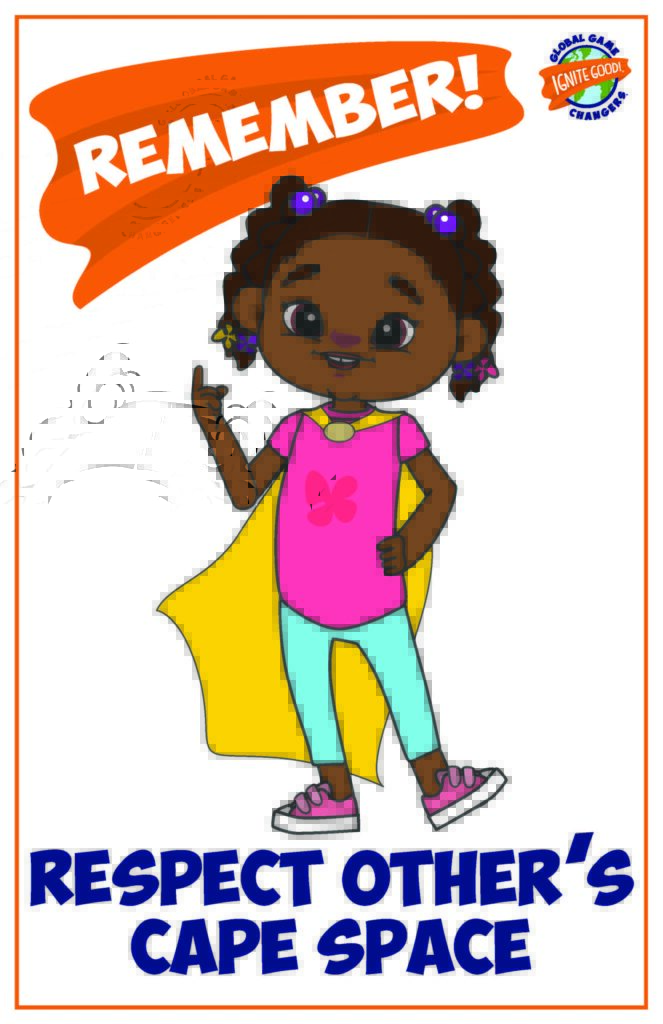
Young students often need a concrete image for an abstract boundary. Invite them to imagine the space around their bodies as “cape space.” Discuss how much room a cape needs in line, on the carpet, at a desk, in the gym, or during recess – and why another person should ask before entering that space.
This shared language can make redirection simpler: “Please respect their cape space” is specific, neutral, and easy to understand.
7. Choose one Hero challenge for the day
School culture changes through repeated, observable behaviors. Select one daily challenge: offer a genuine compliment, use kind words, follow directions the first time, listen without interrupting, help a classmate, keep hands and materials to yourself, or use a breathing strategy when upset.
Model what the behavior looks and sounds like. Notice students using it. Close the day by reflecting on what went well and what the class wants to practice tomorrow.
A shared approach for classrooms, counseling, and schoolwide culture
These strategies can begin with one teacher, but they become more powerful when adults use consistent language across settings. Counselors can introduce the emotion-management tools in small groups and help students rehearse them. Teachers can reinforce the same steps during instruction, transitions, lunch, and recess. Principals can highlight Hero choices in announcements, assemblies, and schoolwide expectations.
Consistency does not mean every student needs the same strategy. One child may need movement; another may need quiet, drawing, breathing, or an adult check-in. A shared framework gives students predictable steps while leaving room for individualized supports.
Help every student practice the Hero choice
Being a hero does not mean never feeling angry, frustrated, embarrassed, or overwhelmed. It means learning what to do with those feelings. When schools explicitly teach students to pause, understand their bodies, communicate needs, solve problems, and repair harm, they are doing more than preventing conflict. They are empowering young people to lead with care.
Start with one strategy. Practice it when students are calm. Reinforce it consistently. And if your school is ready for a complete framework that connects positive behavior with purpose, leadership, and service, Global Game Changers is ready to help.
Move beyond a collection of good ideas
The suggestions above can improve tomorrow’s morning meeting or the next difficult classroom moment. Sustained change, however, requires more than a poster or one lesson. Students need repeated practice, adults need aligned language, and schools need resources that connect emotion management, conflict resolution, leadership, empathy, service, and belonging.
Global Game Changers brings those pieces together. The “Don’t Be Krumi, Be a Hero” campaign supplements a broader Pre-K-5 Student Empowerment Program built around the belief that every child can use their talents and hearts to make a difference: MY TALENT + MY HEART = MY SUPERPOWER!®
GGC educators gain access to ready-to-use lessons, posters, worksheets, breathing exercises, emotion-management tools, violence-prevention resources, service-learning experiences, and a shared character-based language students can carry across the school day.